

In the high-stakes environment of modern healthcare, time is the most valuable currency. For a doctor in an emergency room or a nurse in a busy ward, the ability to access accurate patient information in seconds can be the difference between a routine procedure and a critical error. While traditional paper charts and barcode systems have served their purpose, the next leap in healthcare efficiency is being driven by a familiar but powerful technology: NFC (Near Field Communication).
Originally popularized in payment systems and event interactions, NFC wristbands are now evolving into “digital life-links” that carry a patient’s entire medical narrative on their wrist.
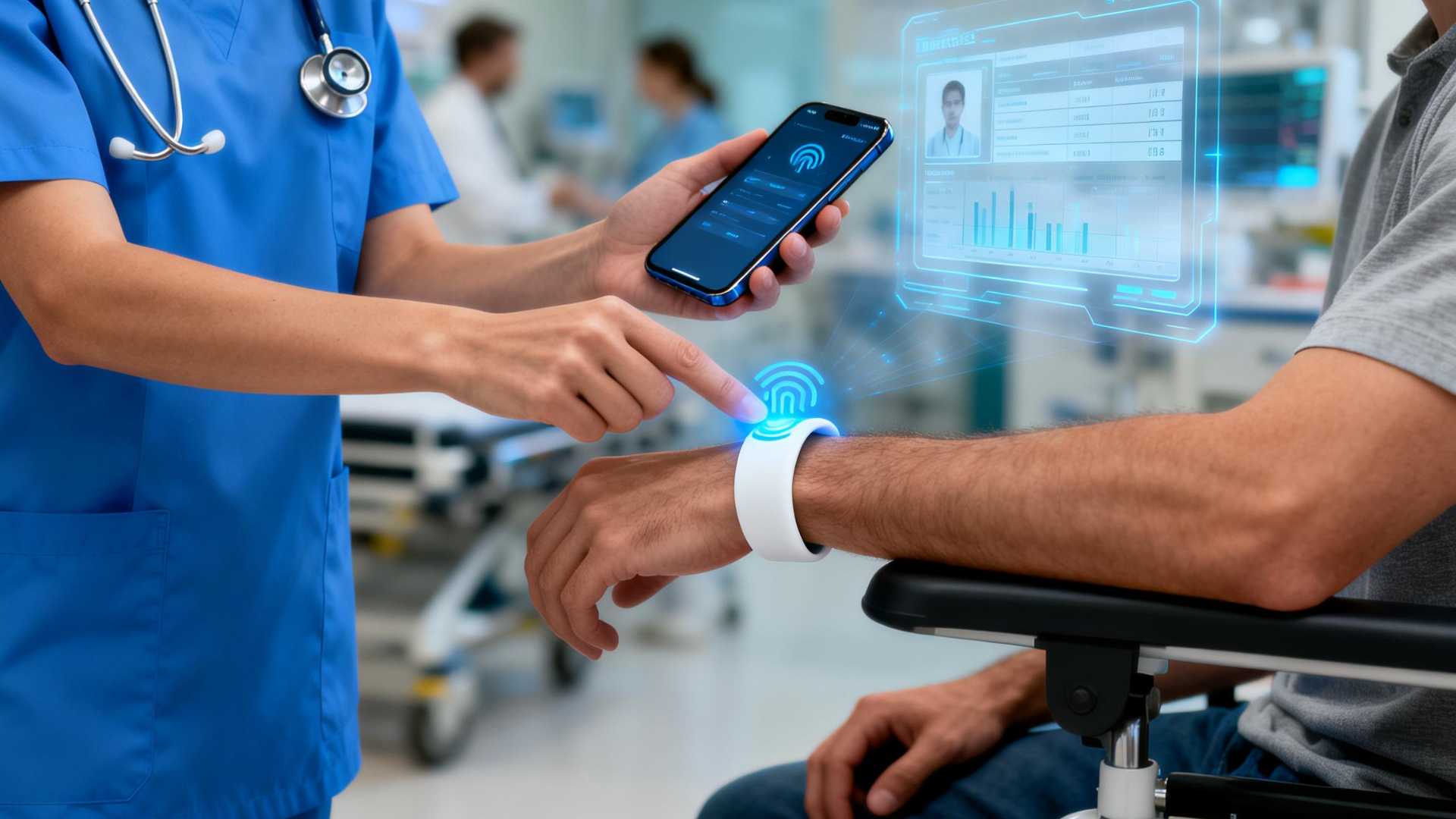
1. The “One-Scan” Medical History: Instant Triage
The most immediate innovation lies in the “one-scan” retrieval system. As Ivan suggested, a simple tap of an NFC-enabled tablet or smartphone against a patient’s wristband can instantly pull up their Electronic Health Record (EHR).
In emergency scenarios—where a patient might be unconscious or unable to communicate—this technology eliminates the “information blackout.” First responders can immediately see blood types, chronic conditions, severe allergies, and current medications. This “Smart Wearable” approach ensures that treatment begins with precision, bypassing the delays of manual database searches.
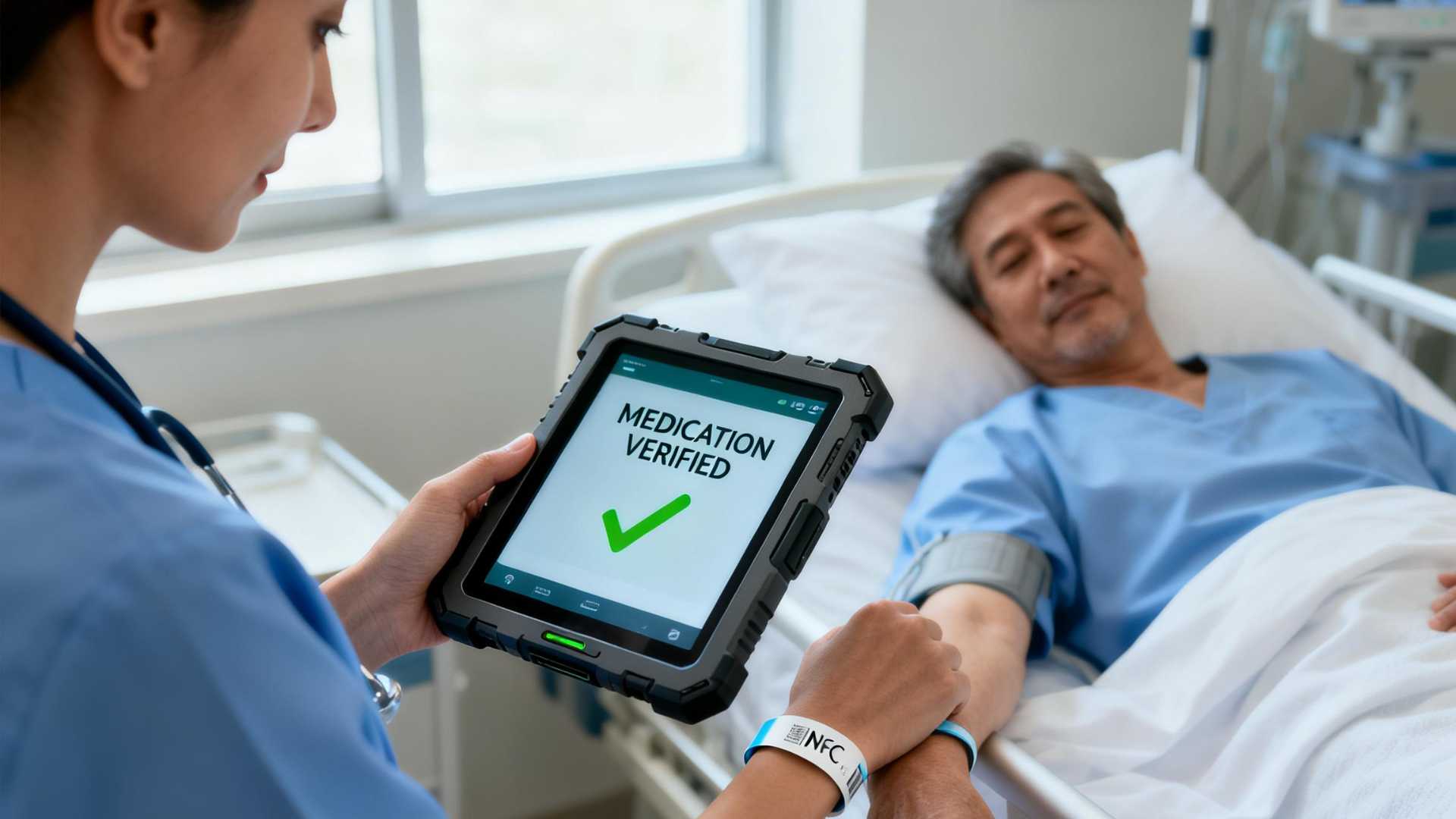
2. Medication Safety and Bedside Verification
Medical errors, particularly in medication administration, remain a significant challenge in global healthcare. NFC technology introduces a fail-safe mechanism. By scanning the patient’s NFC wristband and then the medication packaging, the system can perform a real-time cross-check.
If there is a mismatch—such as a potential drug interaction or an incorrect dosage—the system triggers an immediate alert. This creates a closed-loop safety environment where the “Right Patient, Right Dose” is guaranteed by hardware-level verification.
3. Post-Operative Monitoring and Remote Care
The application extends beyond the hospital walls. For patients recovering at home, an NFC wristband can act as a bridge to remote care. By tapping their phone to the wristband, patients can confirm they have taken their medicine or log daily symptoms into a secure portal.
Furthermore, integrating this with “Behavior Analysis” logic—similar to what we see in advanced pet health tracking —allows the wristband to serve as a low-power gateway for monitoring recovery milestones. It transforms a simple ID band into a proactive tool for managing chronic diseases.
4. The Hardware Reality: Durability and Customization
From a manufacturing perspective, the success of medical NFC wristbands depends on the same “industrial-grade” standards required for outdoor or active-use wearables. These devices must be constructed from hypoallergenic, medical-grade materials (often using durable ABS or silicone) and must maintain a high IP67 or IP68 waterproof rating to withstand constant sterilization and daily wear.
For healthcare providers and medical technology brands, the opportunity lies in OEM/ODM customization. Just as we see in the pet tech sector, medical institutions require branded app interfaces and secure, encrypted data modules to protect sensitive patient privacy while ensuring a seamless user experience.
Conclusion: A Connected Healing Environment
The future of medicine is not just about new drugs; it is about smarter systems. NFC wristbands represent the shift toward a more connected, transparent, and safe healing environment. By turning a passive identification tag into an active data node, we are not just tracking patients—we are safeguarding lives through the power of instant information.
Post time: Apr-09-2026


