

Crowd lighting may look effortless during a concert, sports match, or brand event, but a smooth show begins with careful checks before the audience arrives. A few simple tests can prevent weak signals, mixed colors, dead batteries, and last-minute confusion.
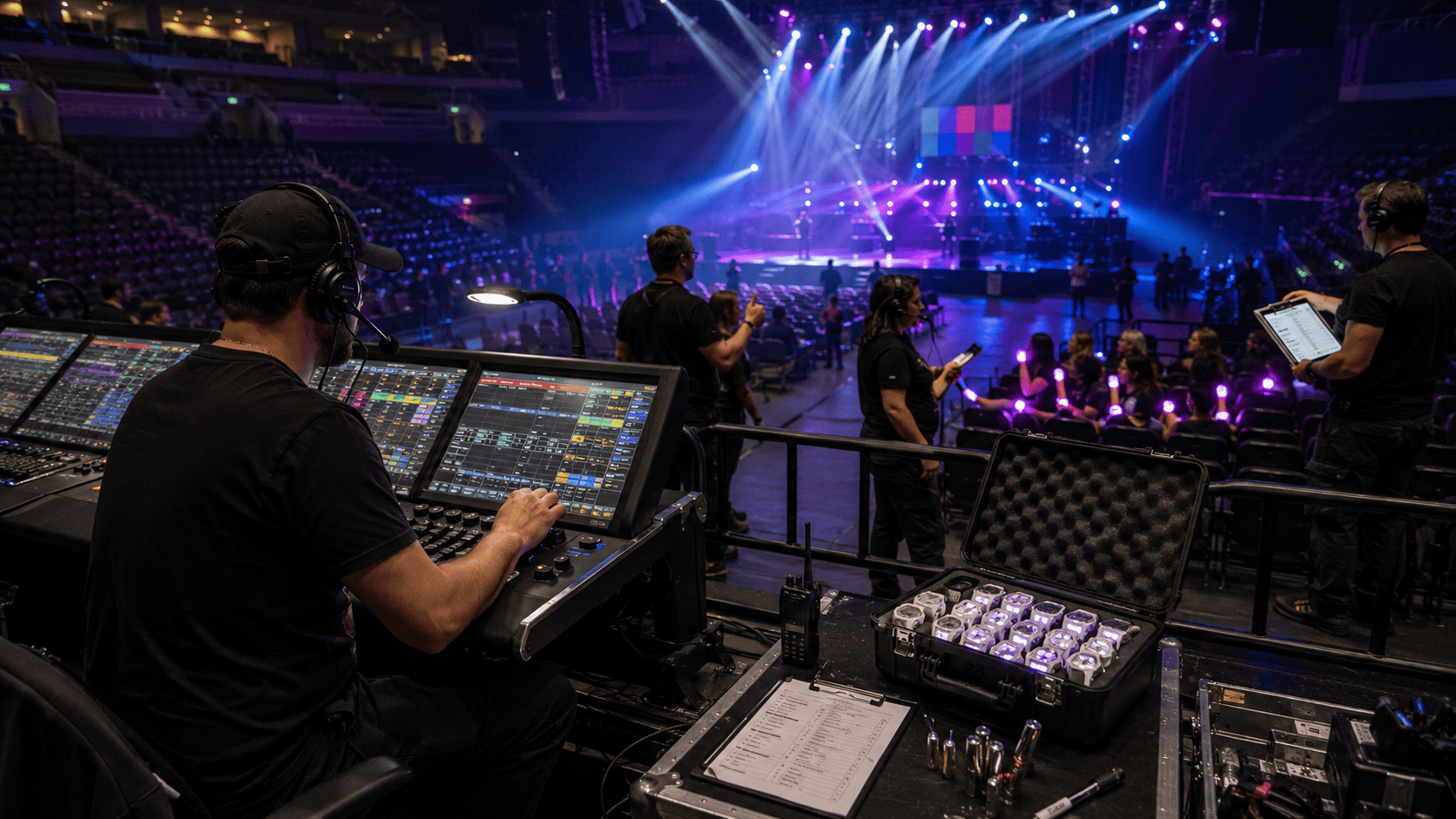
1. Walk the Venue
Check the real space, not only the floor plan. Look for walls, pillars, metal structures, upper levels, and separated audience areas. These features can affect signal coverage and how clearly lighting effects are seen.
Divide the venue into zones such as the stage front, center floor, balcony, VIP area, and entrance. Clear zones make testing and troubleshooting much easier.
2. Test the Full Control Range
Do not test only from the control desk. Send someone to the farthest corner, behind large structures, and into upper seating areas. Run several color changes and flashing sequences.
Watch for delayed responses or sections that fail to react together. A small sample test is useful, but testing a larger batch gives a more realistic picture of how the system will perform with a full audience.
3. Check Power and Activation
Confirm that every lighting item powers on and responds to the correct channel. Remove weak or unstable units immediately instead of mixing them with event-ready stock.
Prepare spare batteries or replacement units in clearly labeled boxes. Staff should know where backups are stored before the doors open.
4. Rehearse the Real Show Cues
Test the effects that will actually be used, including slow fades, rapid flashing, blackout moments, group changes, and cues linked to music or stage actions.
Keep the first rehearsal simple. Once the basic cues work reliably, add more complex sequences. This makes it easier to identify the cause of a problem.
5. Give Staff Clear Roles
Assign one person to operate the controls, one to watch the audience area, and one to handle replacements. Provide a short checklist with channel settings, zone names, backup locations, and emergency contacts.
Good crowd lighting is not only about brightness. It depends on timing, coverage, and preparation. A focused technical check before the event can prevent small issues from affecting the entire show.
Post time: Jul-22-2026


