

Concert technology has evolved dramatically over the past decade. Today, audiences are no longer just spectators—they often become part of the visual experience. One of the most popular ways to achieve this effect is through remotely controlled LED devices distributed to the crowd.
However, if you look closely at different concerts around the world, you’ll notice something interesting. Some shows prefer LED wristbands, while others rely heavily on LED glow sticks.
Both devices can be synchronized with music, controlled remotely, and used to create spectacular crowd lighting effects. So why do different concerts choose different options?
The answer often depends on concert style, audience interaction, and cultural preferences.
The Role of LED Wristbands in Large-Scale Shows
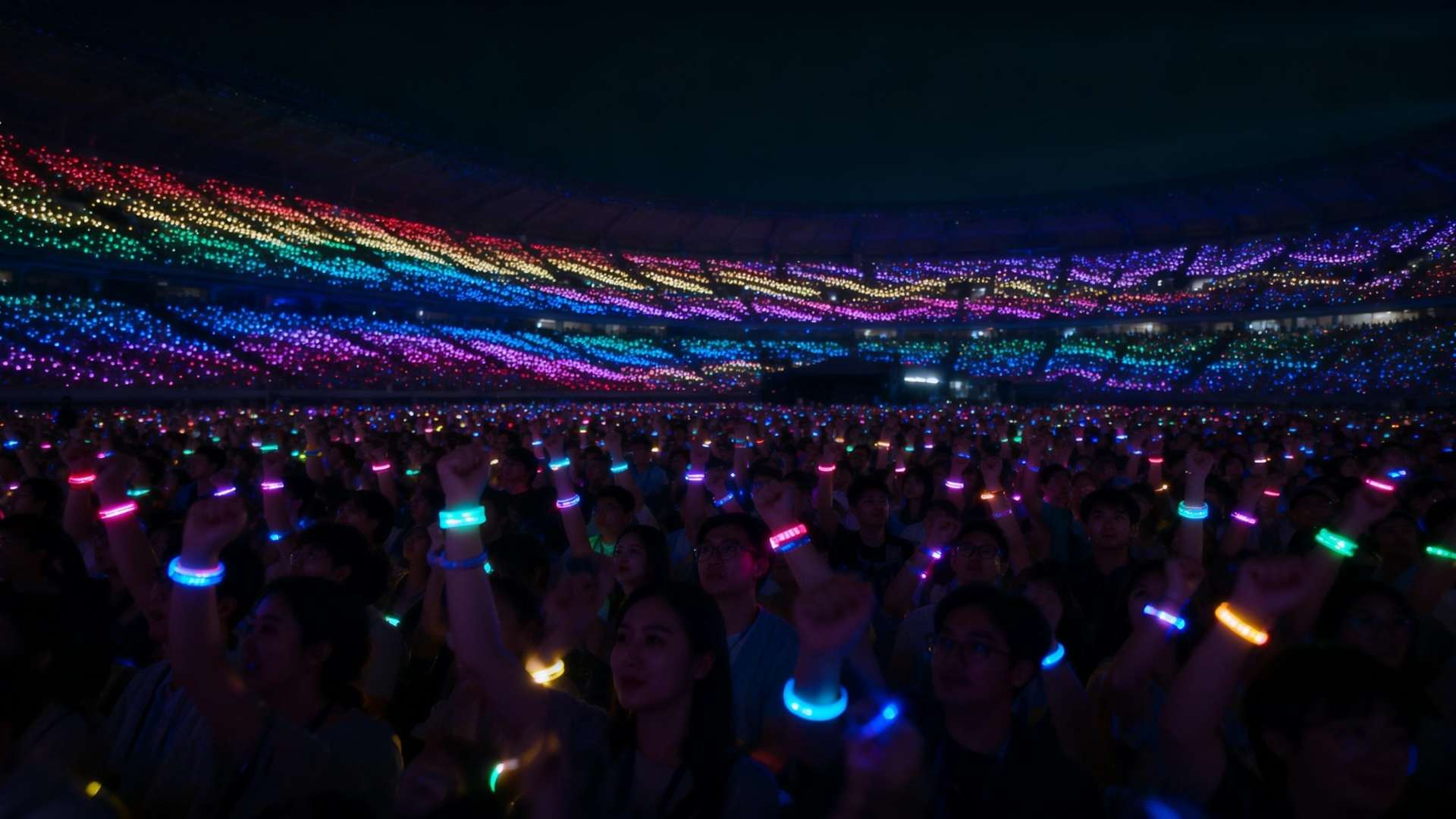
LED wristbands are widely used in large international concerts and music festivals. Artists like Coldplay helped popularize this technology by turning entire stadiums into glowing oceans of light.
The key advantage of wristbands is convenience. Because they are worn on the wrist, the audience can participate in the lighting show without needing to hold anything.
This makes them especially suitable for events where:
- Fans are dancing or moving frequently
- The audience may be holding phones to record videos
- The show emphasizes immersive visual effects across the entire venue
Since the wristbands stay on the audience’s hands automatically, the lighting effects appear more evenly distributed across the crowd. When viewed from aerial cameras or stage angles, the stadium can look like a massive glowing constellation.
For large stadium shows focused on atmosphere and immersion, wristbands are often the preferred choice.
Why Glow Sticks Remain Extremely Popular
While LED wristbands are common in many international concerts, LED glow sticks remain incredibly popular in certain music scenes, especially in Asia.
Glow sticks offer a different type of audience interaction. Instead of passively wearing a light device, fans actively wave glow sticks in rhythm with the music.
This creates a completely different visual experience.
When thousands of glow sticks move together, the crowd becomes a dynamic sea of motion. The lights don’t just shine—they dance with the music, forming waves of color that rise and fall across the audience.
For pop concerts, idol performances, and fan-driven shows, this interactive element is incredibly powerful.
Fans feel like they are participating in the performance, rather than just watching it.
Cultural Differences in Concert Experiences
Another reason for the difference between wristbands and glow sticks is cultural tradition.
In many Asian music markets, glow sticks have been part of concert culture for decades. Fans often bring customized glow sticks or wave them in synchronized fan chants.
These movements are not random. In some fan communities, the way glow sticks are waved is carefully coordinated to match specific songs or moments in the performance.
Because of this long-standing tradition, glow sticks are often seen as an essential part of the concert experience.
In contrast, Western concerts have historically focused more on large-scale lighting and stage production. Wristbands fit naturally into this style, as they help extend the stage lighting effects into the audience area.
Visual Effects: Static Glow vs Dynamic Motion
From a visual design perspective, wristbands and glow sticks also produce different types of lighting effects.
LED wristbands tend to create uniform, evenly distributed lighting across the entire audience. This works well for creating large visual patterns such as waves, pulses, or color transitions throughout the stadium.
Glow sticks, on the other hand, introduce movement and rhythm. Because fans wave them during songs, the lighting effects become more dynamic and energetic.
For certain songs—especially high-energy dance tracks—the movement of glow sticks can amplify the excitement of the crowd.
In many concerts, the choice between wristbands and glow sticks ultimately depends on whether the production team wants a controlled lighting canvas or an energetic visual wave.
Practical Considerations for Event Organizers
Beyond artistic choices, practical factors also influence the decision.
Event organizers may consider:
- Audience behavior and engagement style
- Distribution and collection logistics
- Reusability and environmental impact
- Budget and production design
Glow sticks are often easier to distribute and collect, especially for fan-driven concerts. Wristbands, meanwhile, can be more comfortable for long events and easier for audiences to wear throughout the show.
Each option has its own advantages depending on the scale and design of the event.
Two Different Tools for the Same Goal
At the end of the day, both LED wristbands and LED glow sticks serve the same purpose: turning the audience into part of the show.
Whether through the steady glow of thousands of synchronized wristbands or the rhythmic waves of moving glow sticks, these devices transform spectators into a living extension of the stage.
And as concert technology continues to evolve, we may see even more creative ways for audiences to light up the music.
Post time: Apr-01-2026


