

A light-up cube comes out of the glass and keeps flashing on the counter. Is the switch stuck? On a cube that senses liquid through two contacts, a drop can still connect them after you lift it out. The glass is behind you, but the sensor may still be wet.
The drink gives the sensor a path
In a conductive sensor, there’s no easy path for current between the contacts when they’re dry. Touch both with a liquid that conducts well enough and the resistance between them drops. The electronics can detect that change and tell the LED to turn on. The battery supplies the power; the drink supplies the path the sensor is looking for.
Water with dissolved salts can conduct more readily than very pure water. That’s why the word ‘water’ on a sample test sheet doesn’t tell you much on its own. If a cube responds in the water used for a demonstration, it doesn’t follow that the same sensor will behave identically in every drink. The liquid has to reach the sensing points, too. A splash on one side can leave the other contact dry.
Longstar describes its liquid-activated LED ice cubes on the LS-IC04 page as lighting automatically on contact with liquid. The listing doesn’t specify the circuit or a minimum conductivity. The two-contact explanation describes one way to achieve that effect, rather than a confirmed circuit diagram for the LS-IC04.
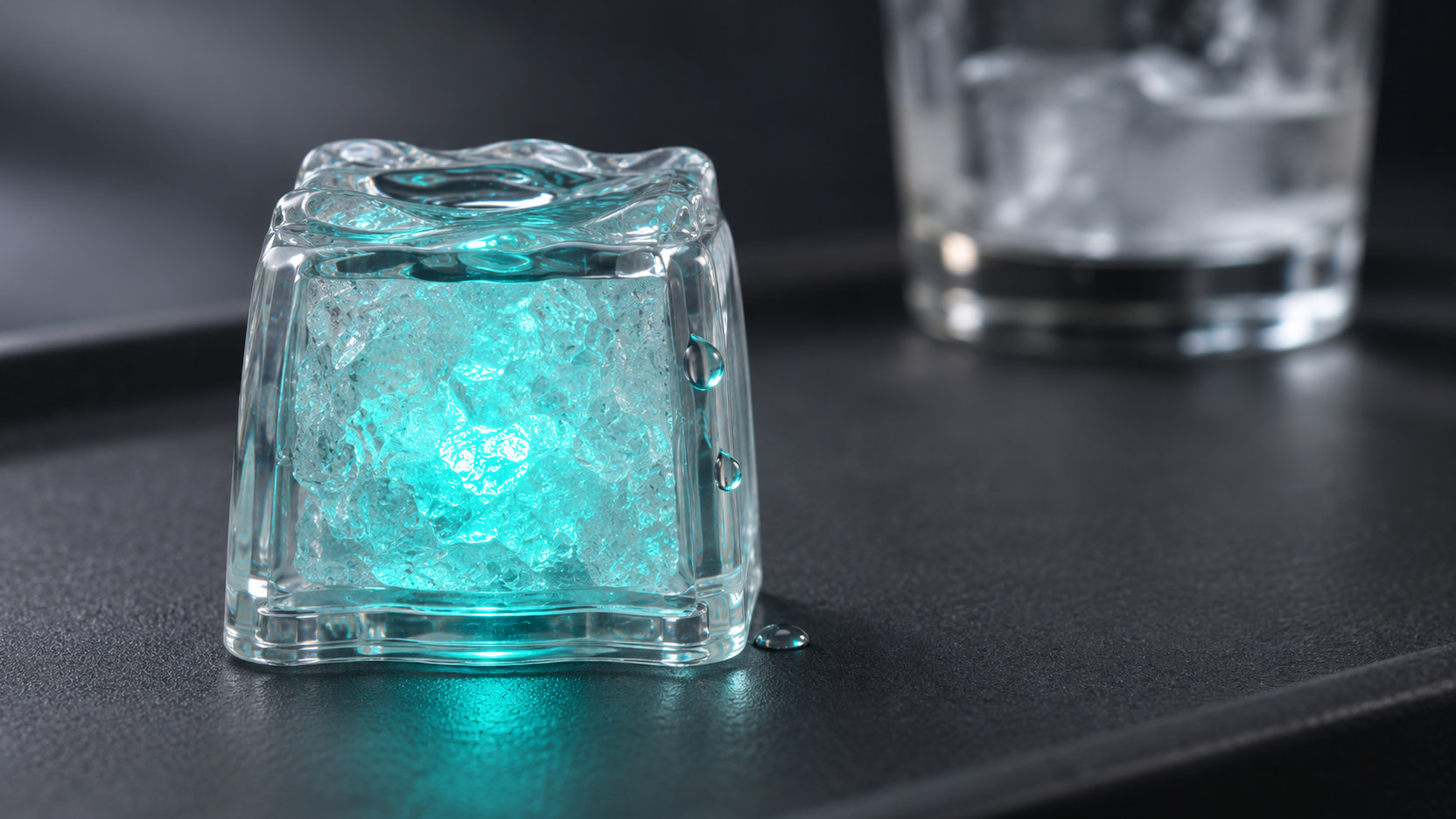
Out of the glass can still mean wet
Lift a cube out and look at the contact area before drawing a conclusion. If a film of liquid still spans the gap, a conductive sensor may continue to register liquid. Once that bridge is gone, the circuit can register a dry condition. Whether the light goes out right away depends on the design. CRAZY PARTZ, for instance, describes a short delay after removal for its moisture-sensor cubes; its button models are switched off by hand.
That distinction is worth keeping on the sample label. A cube with a push button can keep shining on a dry counter because it’s still switched on. A two-contact cube that stays lit while damp hasn’t necessarily failed. And if the contacts are dry and the light stays on beyond the model’s expected shutoff time, a leftover drop isn’t a good explanation anymore.
Try the pour you plan to serve
If you’re approving a bar sample, use the intended glass and beverage in a bench check, within the supplier’s stated conditions for that model. Watch for the point in the pour when the light starts. After removal, record whether the contact area is still wet and when the light stops. Follow the model’s handling instructions before repeating the check.
If a sample lights in your reference liquid but doesn’t light in the intended drink, note both results and whether the liquid reached the sensing area. That’s more useful to the supplier than ‘sometimes doesn’t work.’ A glow confirms that the light came on in that pour. It doesn’t tell you which drinks the model is approved for.
References
Longstar: LED Ice Cube LS-IC04
Microchip Technology: Conductive Sensor Design
CRAZY PARTZ: LED Ice Cube User Guide
Post time: Nov-20-2026


