

At the end of a concert, two crews can count the same LED wristbands and come away with different numbers. The venue crew counts what fans dropped into collection bins. The tour crew counts what can go back into circulation before the next show. For a tour that plans to use the same stock again, the second count determines how many wristbands it can put out the next night.
Coldplay’s June 2024 tour update put a number on its wristband program, reporting an average return and reuse rate of 86%. PixMob, the supplier for the Music of the Spheres tour, describes a further step in its 2025 account of device recovery. It refurbishes returned devices and says upgraded versions of its X4 and Waveband 4 can serve multiple events before they need recharging and refurbishment. These examples show how some touring programs are treating wristbands as stock that moves from show to show.
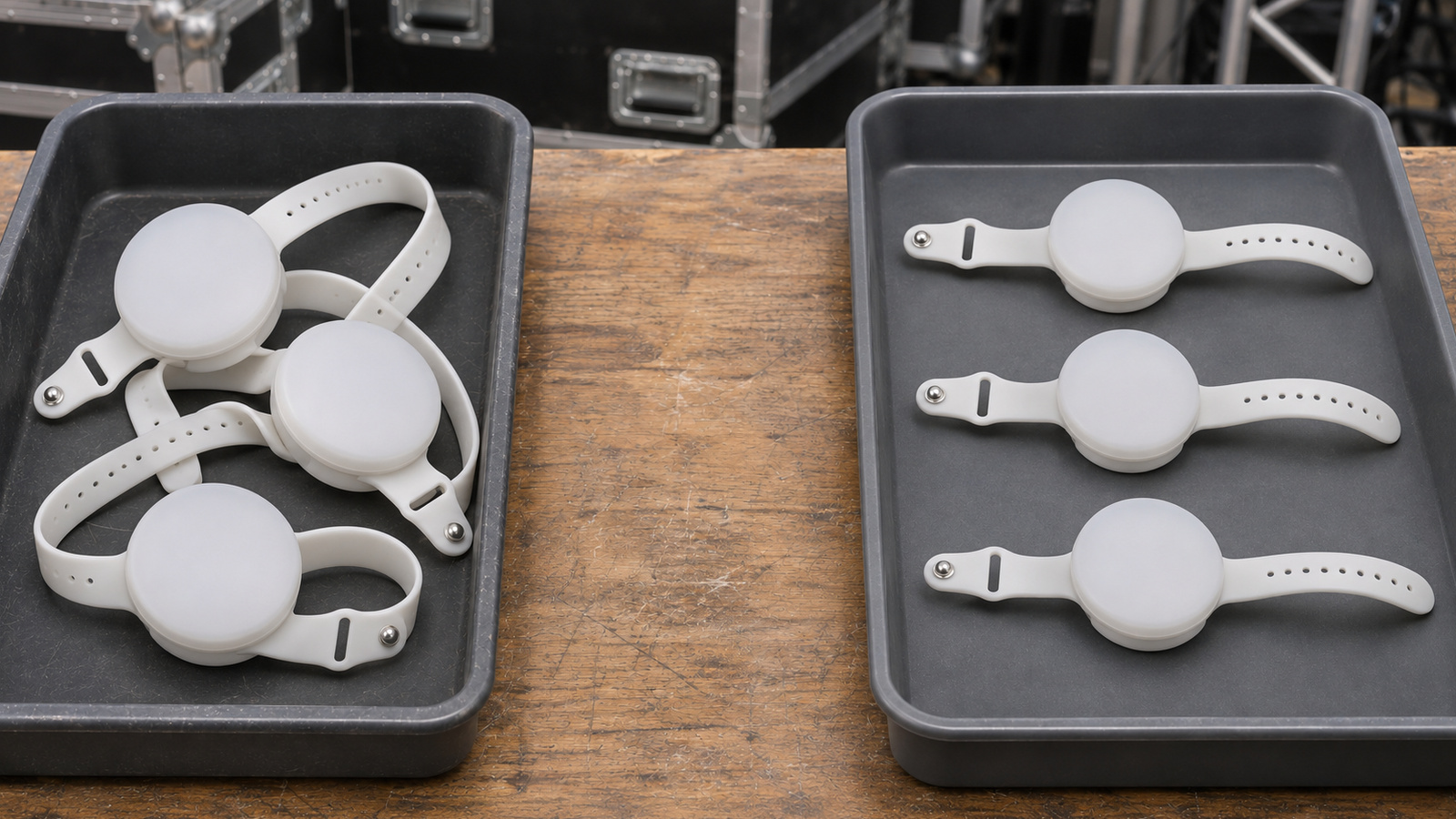
Three Counts for the Same Batch
Start with the number issued to the audience. Count the devices collected at the exits against that figure to get the return rate. After sorting and checks, record how many of the returned devices can be issued again. A unit can arrive in the return bin with a damaged strap or need attention before it will light reliably. It still counts as a return.
Suppose a show issues 10,000 bands and gets 8,600 back. If 8,000 are ready by the next load-in, the return rate is 86% and the share of the original batch ready for the next show is 80%. In this hypothetical example, a second show of the same size needs 2,000 ready bands from other stock, before any reserve. Some of the 600 returned units may come back into service later. Give that stock its own line on the count sheet so it doesn’t get allocated twice.
Turnaround Changes the Stock Plan
A venue can report a good collection night while the tour is still short of devices for tomorrow. That can happen if returned batches have to travel to a refurbishment site or if a crew has only a few hours between collection and packing. Agree on where the check happens and when the usable count is due. If a batch misses that cutoff, the next venue needs to know before it schedules handout.
The checks depend on the device. A multi-event model may have enough power left for the next show but still need a visual and functional check. For a wristband that needs charging, ask when charging capacity becomes available and how the crew identifies a finished batch. Keep returned stock separate from stock cleared for issue so cartons stay easy to identify when the truck is being loaded.
Coldplay’s published figure describes its own tour. For a new event series, use a pilot to get local counts and see how long it takes for returned units to become ready. Record the issue count, the exit count and the ready count by the next packing deadline. That last number tells the production team how much stock it can book for the next show.
References
Coldplay, Tour Emissions Update (June 3, 2024)
PixMob, Closing the Loop on Event Waste (April 22, 2025)
PixMob, Coldplay Music of the Spheres World Tour
Post time: Nov-04-2026


