

A lanyard can glow in a dark product photograph and still be the wrong choice for an evening event. For a buyer comparing LED and glow-in-the-dark lanyards, the useful question is where the light comes from. Does the effect need to start when someone presses a button, or can it depend on light absorbed earlier?
What keeps the lanyard glowing
An LED produces light when electrical current passes through its semiconductor. Berkeley Lab explains this basic operating principle. A battery-powered LED lanyard therefore doesn’t need a period under the venue lights before it can be switched on.
Longstar’s LED lanyards, including the LS-NY01, use batteries and offer a manual mode. That makes electrical power and operation relevant to the choice. It doesn’t establish the brightness or runtime of a particular setting; those need to be checked for the actual configuration.
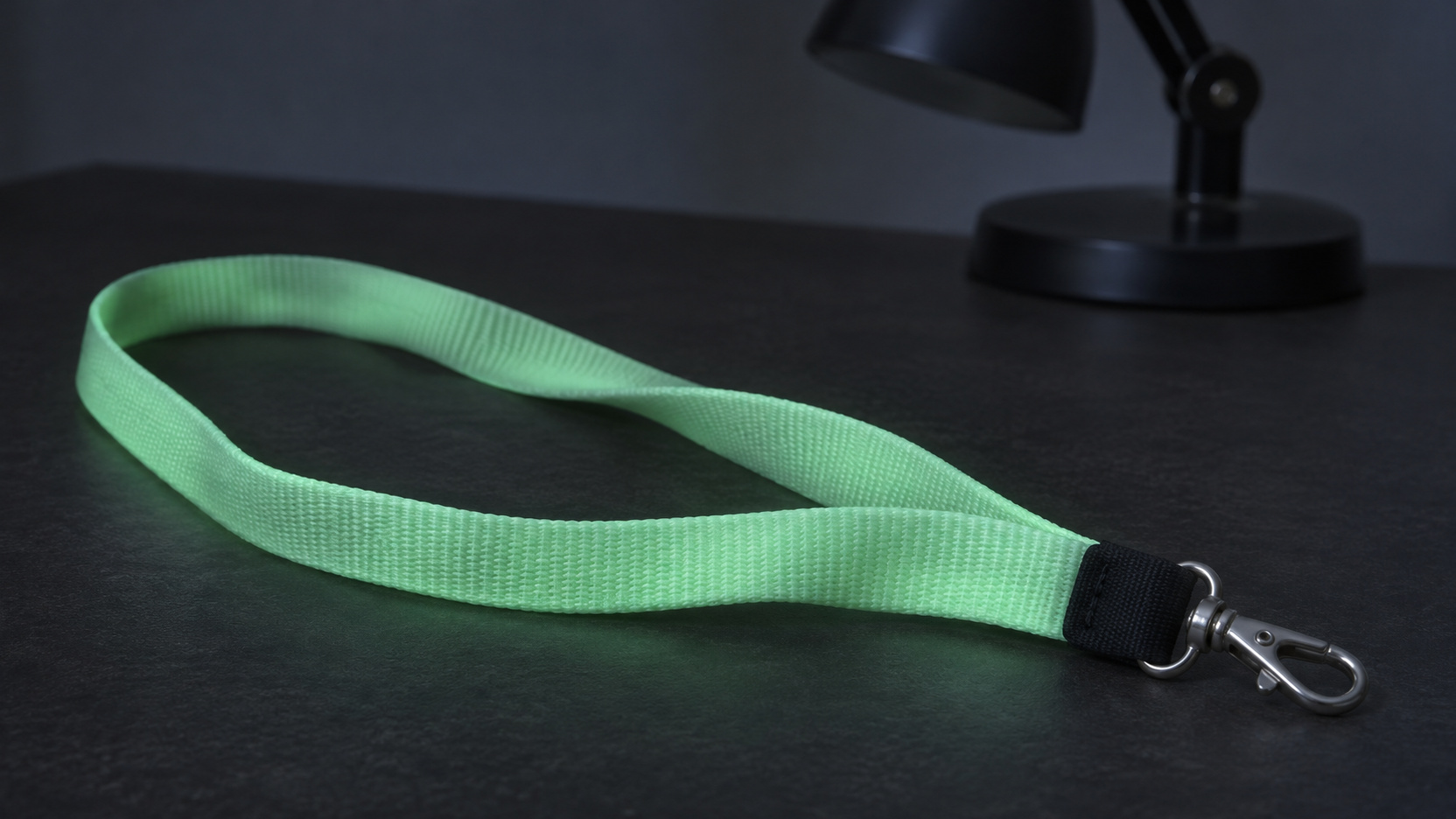
Phosphorescent fabric works differently. It absorbs energy from light and releases it over time, including after the illuminating source has gone. Sogedex describes this process for its polyester glow-in-the-dark lanyard. The fabric itself supplies an afterglow without a battery driving LEDs.
Turning down the room lights makes that afterglow easier to see. Darkness isn’t the energy source. Nemoto, a manufacturer of photoluminescent pigments, explains that emission begins after excitation, even before the surroundings become dark.
The wait before the event matters
Afterglow fades as stored energy is released. Its useful appearance depends on the material and its prior exposure. Nemoto identifies the light source, exposure strength and exposure time among the factors affecting performance. A sample moved straight from strong light into a dark box may look different after a long wait in a dim hall.
The American Physical Society’s glow-in-the-dark activity illustrates why illumination deserves attention: it compares phosphorescent material exposed to white light through different colored filters. Simply describing a room as bright doesn’t fully describe the light reaching the material.
For an event comparison, give the fabric sample the light exposure it would actually receive, then leave it under the planned conditions until the intended viewing time. Observe it then as well as immediately after exposure. This is a practical comparison, not a standardized brightness test.
Try the LED sample over the same event period using its intended mode. Its light depends on electrical operation, so a battery check belongs in that trial. Neither a fresh battery nor a freshly charged glow sample, viewed only at the start, establishes how the finished lanyard will look later.
If the brief calls for light to begin on demand after a dark waiting period, LED operation fits that requirement more directly. A battery-free afterglow effect may suit a different brief, provided the earlier light exposure and later appearance are acceptable. A promise that fabric “glows for hours” still needs a clear answer about how visible it remains at the moment guests will see it.
References
Berkeley Lab, Light-Emitting Diodes (LEDs) (2020-05-14)
Sogedex, Customised flat glow-in-the-dark lanyard
Nemoto, Photoluminescent Pigment Q&A
American Physical Society, Glow in the Dark
Post time: Nov-10-2026


