

A logo can look crisp on a plastic cup and still rub away during handling. For a brand team ordering custom LED cup printing, appearance and print durability need separate checks. Changing the artwork won’t fix a surface that the chosen ink cannot adhere to.
Longstar’s LED light cups offer printing customization. Before choosing a printing process, identify the material at the exact place being decorated. A clear wall and a colored base may need different ink systems if they use different plastics.
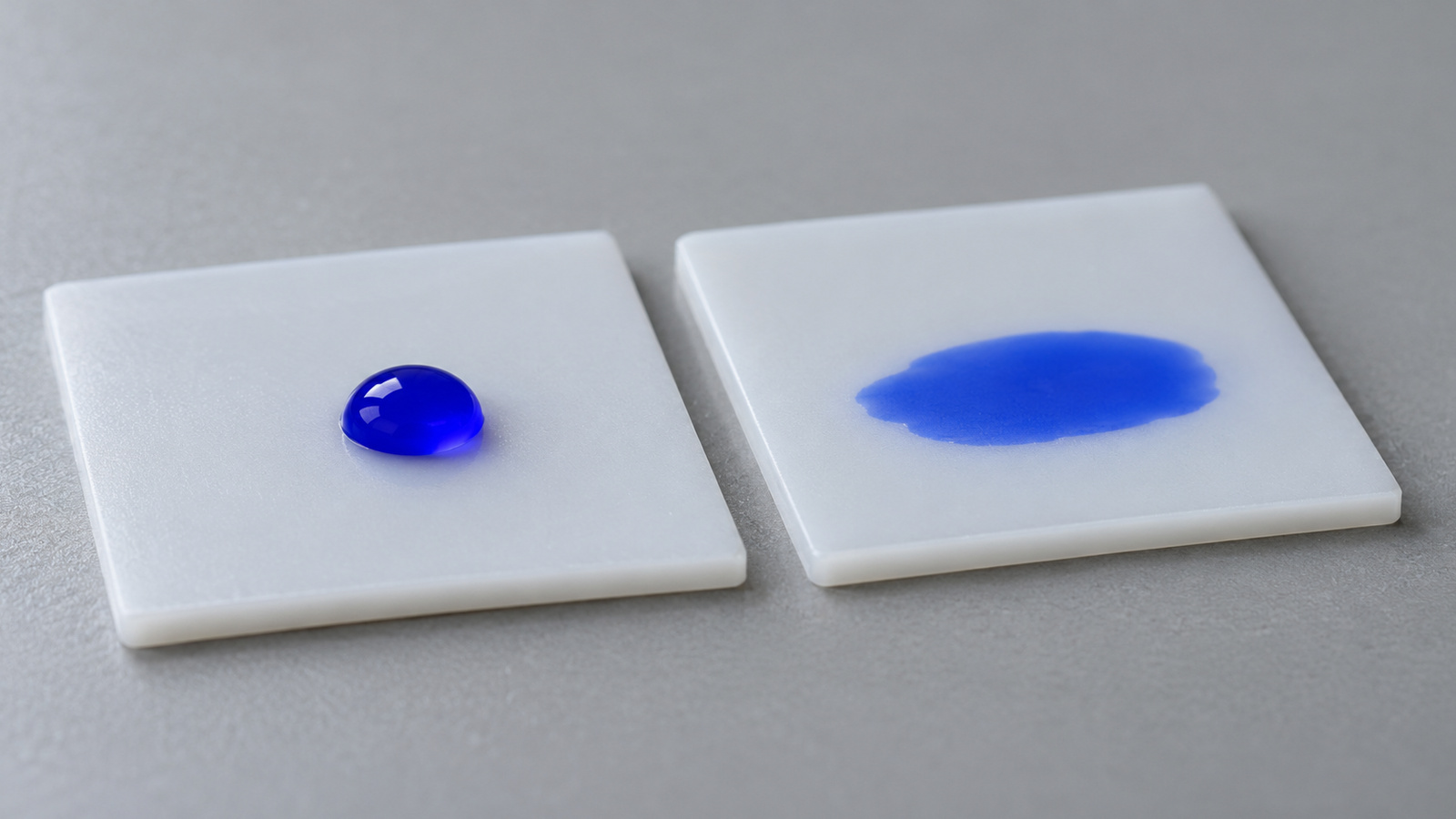
Ink needs contact with the surface
Wetting describes how a liquid spreads over a solid. Enercon’s technical overview explains that ink tends to bead when its surface tension is higher than the substrate’s surface energy. Better spreading gives the ink more contact with the part, which helps adhesion.
This is why the resin matters. Polypropylene, for example, can be difficult to print with an unsuitable ink. Depending on the system, a manufacturer may use surface treatment or an ink formulated for that substrate. The choice belongs to the specific plastic and printing process; there’s no universal treatment recipe for every LED cup.
Even the name of the resin leaves some questions open. Proell’s Norifin PP N sheet describes an ink for untreated polypropylene, yet warns that adhesion depends on the compound and production conditions. Lubricants or components that reach the surface can interfere with the print. It also notes that apparently identical materials can vary between batches.
A cup can therefore look clean while its printing surface behaves differently. When a previously successful logo starts lifting, compare the actual molded parts and their surface condition before redrawing it.
A dry print may still be developing resistance
The ink has its own timetable. With a two-component system, solvent evaporation and the reaction between ink and hardener are separate processes. Marabu’s Tampa Star TPR sheet distinguishes physical drying from chemical cross-linking. A print that feels dry can still need time under the specified conditions before resistance is assessed.
Some ink and hardener mixtures also have a limited working period, called pot life. Marabu warns that exceeding it can reduce adhesion and resistance even while the mixture still appears printable. A clear image coming off the machine tells you little about whether that working period was respected.
These are examples of ink behavior, rather than a specification for the ink used on a particular Longstar order. The selected system’s technical sheet determines the relevant drying and curing conditions.
Judge the finished print after the required drying period
Assess adhesion on the actual decorated part once its required drying or curing period is complete. Enercon recommends testing finished prints against their intended handling conditions. Agree on the test method with the manufacturer; a quick rub straight after printing answers a different question from a test on a fully processed sample.
For an LED cup project, keep the chosen plastic and printing process tied to the approved physical sample. Repeat the adhesion check if either changes.
References
Enercon Industries, An Overview of Surface Treatment for Three-Dimensional Objects (April 2003)
Proell, Norifin PP N Technical Information (July 2022)
Marabu, Tampa Star TPR Technical Data Sheet (June 20, 2024)
Post time: Nov-07-2026


